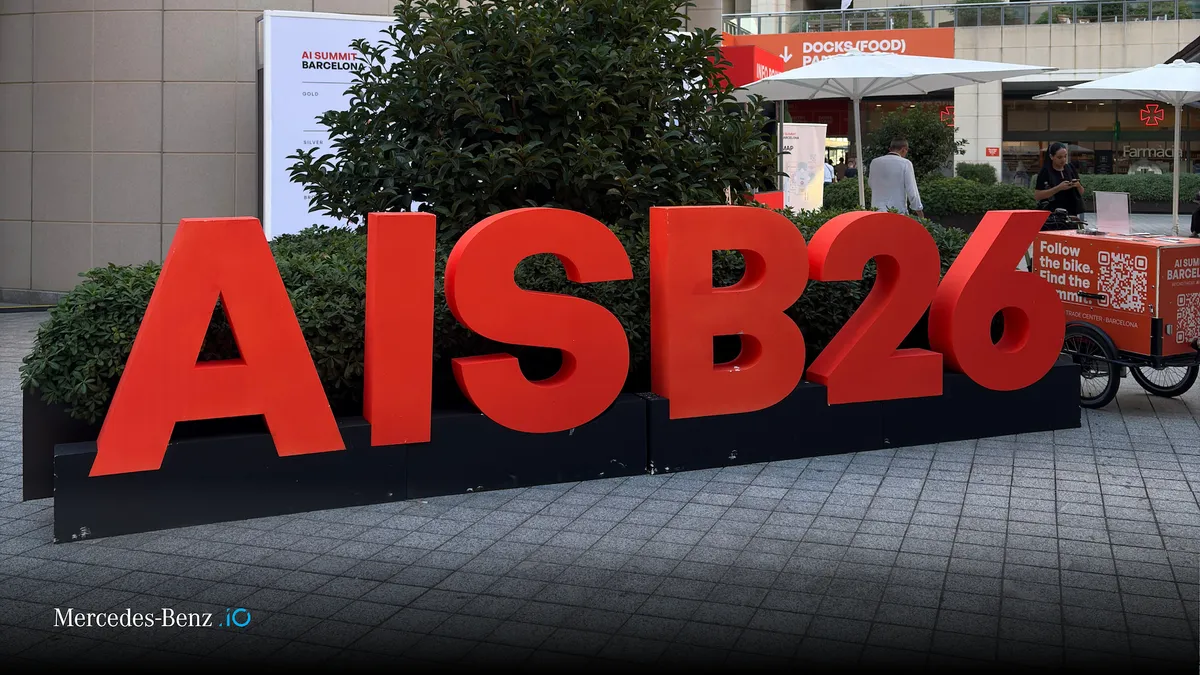
What the AI Summit Barcelona Taught Me About the Next Stage of AI
When I attended AI Summit Barcelona, I expected to come back with new perspectives on AI tools, development practices and emerging technologies. What I didn’t expect was how often the conversation would move beyond developer productivity and towards a much bigger question: how AI is changing the way we build products.
The conference itself was a mix of challenges and valuable takeaways. The sessions I joined, the workshops and, most importantly, the conversations with other engineers offered valuable perspectives on where AI adoption is heading.

Carolina Brásio
Contents
Looking Beyond Developer Productivity
One of my biggest takeaways was that the conversation around AI is evolving.
For the last few years, much of the focus has been on how AI can help developers work faster. While that remains important, many of the discussions in Barcelona focused on how AI can become part of the products and solutions we build. The Google Cloud Antigravity workshop was a good example. It demonstrated how AI agents can support the development process from an initial idea to a production-oriented application.
AI agents and agentic workflows were among the most discussed topics at the summit. What I found particularly interesting was the growing focus on systems capable of executing tasks, interacting with tools and participating in more complex workflows.
I also attended the Voice AI Builders side event, where demonstrations showcased how conversational AI is evolving beyond traditional chat interfaces. What stood out wasn’t just the technology itself, but the practical applications being explored and the questions organisations are now trying to answer.
The real opportunity isn’t simply writing code faster. It’s understanding how AI can become part of the solutions, workflows and experiences we create.
The Challenges and Opportunities Ahead
At the same time, many conversations highlighted a reality that’s easy to overlook: building an impressive demo is one thing, bringing an AI solution into production is something else entirely. The closer discussions got to real-world implementation, the more familiar the challenges sounded. People weren’t only talking about model capabilities. They were talking about reliability, security, observability, governance and integration with existing systems.
One of the insights that felt most relevant to our work at Mercedes-Benz.io was the importance of looking beyond AI as a coding assistant. During the session Coding with AI: The Good, the Bad and the Ugly, we saw a practical case study showing how AI-assisted development can improve productivity while maintaining code quality. The results were interesting, but what resonated most with me was the broader conversation about where AI can create meaningful value.
At Mercedes-Benz.io, we’re already exploring how AI can become a more integrated part of our engineering workflows and products. The next step isn’t adopting AI simply because the technology exists. It’s understanding where customised solutions and intelligent agents can solve real problems and create value. The summit reinforced something reassuring: while the technology is evolving quickly, the foundations of good engineering remain the same.
The Value of Curiosity
Some of my most valuable takeaways came not from the stage, but from conversations with other attendees. After the Coding with AI session, I had the opportunity to discuss the presentation with a colleague from Mercedes-Benz.io. We compared the case study with our own engineering practices and reflected on where we are today and where we want to go next regarding AI adoption.
Those conversations reinforced something I value about conferences: sometimes the most meaningful insights come from discussing what you’ve learned with others rather than simply listening to another presentation.
If there’s one message I’d share with fellow MB.ioneers who couldn’t attend, it’s this: don’t limit your perspective on AI to how much faster it can help you write code. The most interesting opportunities lie in rethinking how we design solutions, automate workflows and integrate intelligent capabilities into the products we build. At the same time, we shouldn’t confuse impressive demonstrations with production-ready solutions. The fundamentals of good software engineering still matter and will become even more important as AI systems continue to evolve.
I left Barcelona optimistic about what’s ahead, but also convinced that curiosity, experimentation and knowledge sharing will be just as important as the technology itself. And perhaps most importantly, some of my most valuable takeaways came from conversations with people who are exploring many of the same challenges we are.
Related articles
Jens Wallner
How Information Architecture Creates Shared Understanding
In this edition of Tecknowledgy, Jens Wallner, Information Architect at Mercedes-Benz.io, shares why alignment across Product, Design, Engineering and Business starts with something deceptively simple: being clear about
Nov 13, 2026
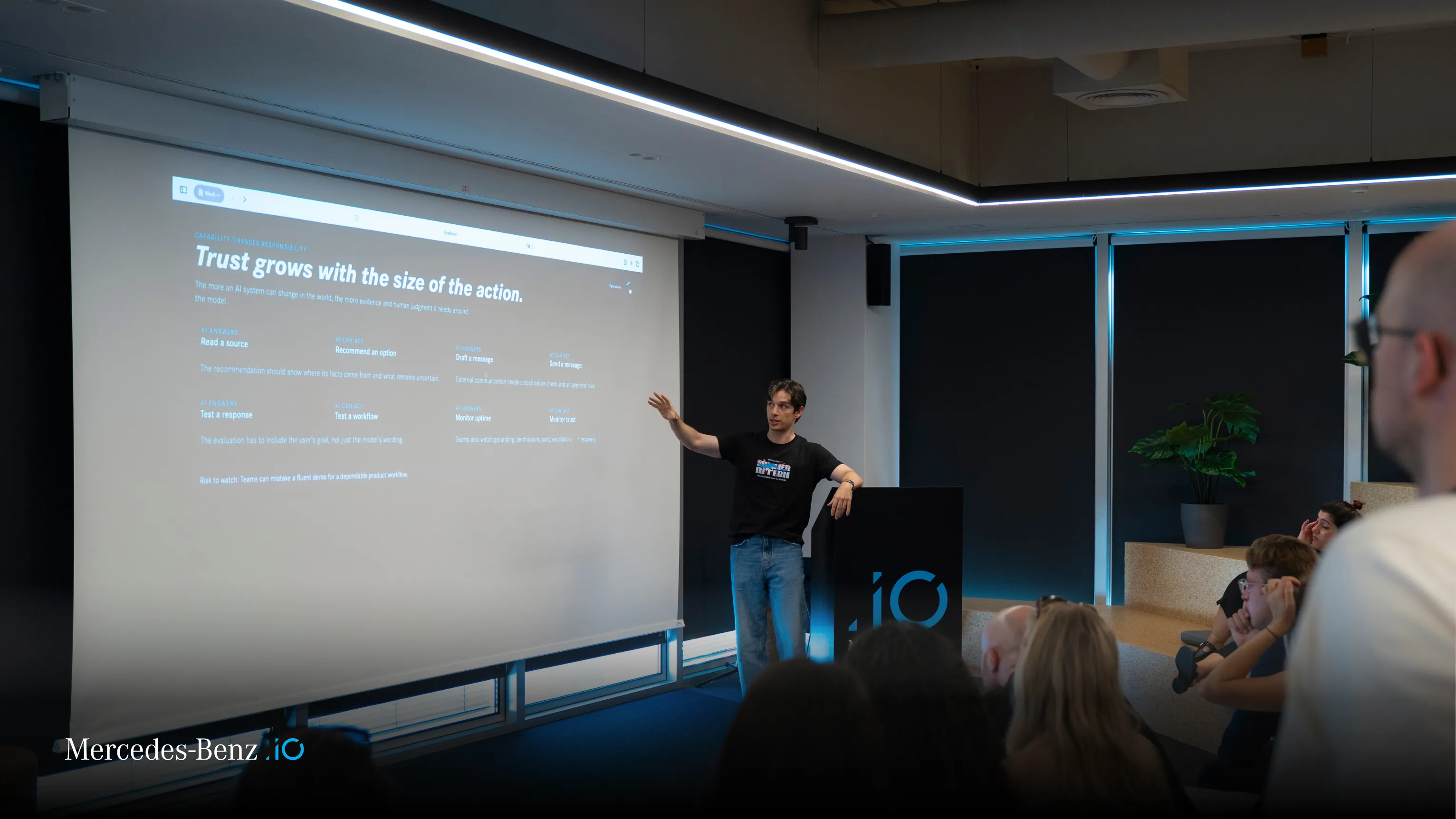
João Almeida
After the Filter Menu: Four things that actually changed, and one slide I break on purpose
Over the last few months, I have given more or less the same presentation several times. Students, meetups, groups passing through our Lisbon office. Somebody has to explain how AI and data actually show up inside a digi
Nov 6, 2026

Daniel Costa
From hackathon idea to everyday tool: what Toolbox taught me about building for real needs
At Mercedes-Benz.io, I work as an Application Architect, also known as a Solutions Architect, in the DSDBook area. DSDBook is the booking engine behind online workshop appointments at Mercedes-Benz, helping customers sch
Nov 3, 2026