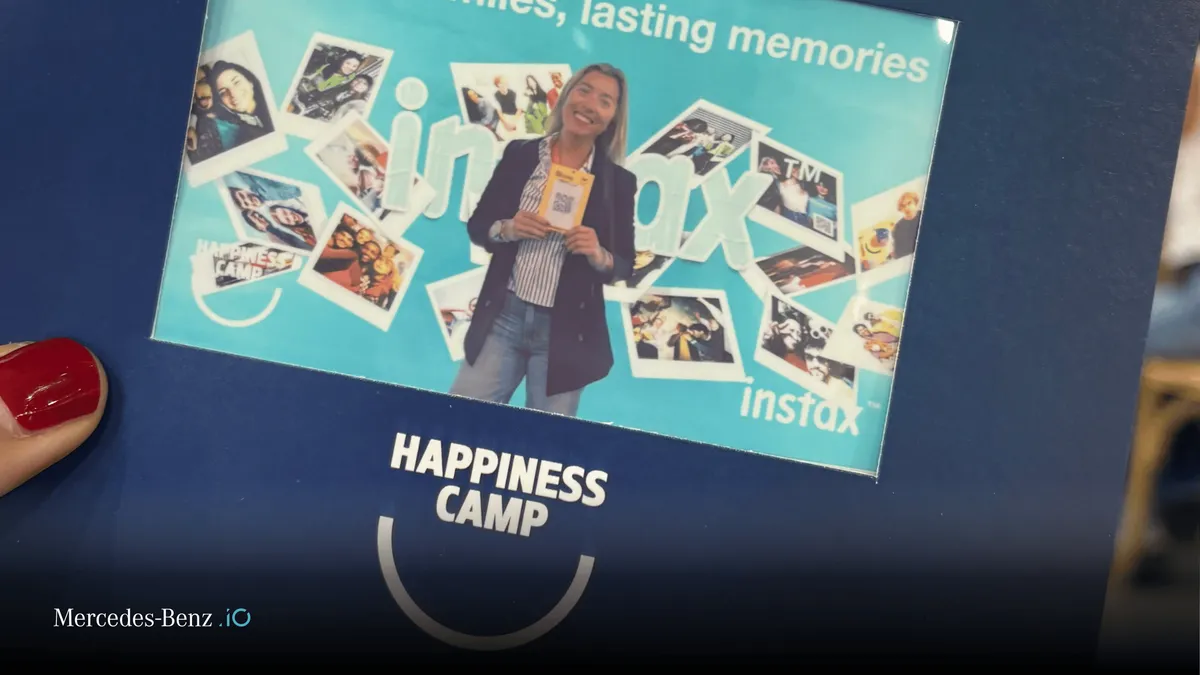
What Happiness Camp Taught Me About the Human Side of Work
What does happiness at work really mean? Is it about motivation, positivity and engagement, or is there something deeper behind it?
When I attended Happiness Camp, I expected to come back with new perspectives on well-being, culture and what helps people thrive at work. What I didn’t expect was that the reflection that would stay with me the longest would revolve around something much simpler: recognising the human side of the people we work with every day.

Vera Figueiredo
Contents
Throughout the event, I found myself thinking about compassion. Not as feeling sorry for someone, but as recognising that there’s always a story behind the person in front of us.
We’re constantly interacting with colleagues, teammates and stakeholders. We see reactions in meetings, messages in chats, moments of disagreement and periods of pressure. Yet we rarely see the full picture. It’s easy to interpret a behaviour, reaction or missed deadline based on what we observe, but far more difficult to understand everything that may sit behind it.
One of my biggest takeaways from Happiness Camp was the reminder that we often know far less about people’s circumstances than we think. Compassion begins when we remember that. It encourages curiosity instead of judgement and understanding instead of assumptions.
The more I reflected on the event afterwards, the more I realised that compassion often starts with something very simple: paying attention.
Looking Beyond the Work
Attention is one of the simplest ways we can show another person that they matter. Not the kind of attention that comes from hearing someone’s words while thinking about our response, but the kind that comes from genuine curiosity and a desire to understand their perspective.
As a Scrum Master, this naturally made me think about teams.
We often talk about delivery, processes, metrics and outcomes. Those things matter, but Happiness Camp reinforced something I’ve learned over the years: you can’t fully understand team effectiveness by looking only at the work itself.
Behind every Sprint, every deadline and every delivery commitment are people. Some of the strongest teams I’ve worked with weren’t successful because they avoided difficult conversations. They were successful because people felt safe enough to have them. They could challenge ideas, ask for help, admit uncertainty and learn from one another without damaging relationships.
That reflection also changed the way I think about happiness at work. It’s easy to imagine happiness as a workplace where everyone feels positive all the time and where challenges rarely appear. But many of the healthiest teams I’ve seen have also navigated uncertainty, disagreements and pressure together.
What made those teams successful wasn’t the absence of challenges. It was the presence of trust. People felt heard. They felt valued. They knew they could rely on the people around them.
That distinction stayed with me because it shifted the question from “Are people happy?” to something much more meaningful: “Are we creating an environment where people can thrive over time?”
The Culture We Create Every Day
If there’s one reflection I’ve continued to carry with me since the event, it’s that we often underestimate the impact we have on the people around us. When we talk about culture, it’s natural to think about organisations, leadership decisions or major initiatives. Yet my experience has taught me that culture is often shaped in much smaller ways. It’s shaped in everyday interactions.
The colleague who genuinely listens. The teammate who makes space for another perspective. The manager who creates the conditions for an honest conversation. The person who notices someone is unusually quiet and simply checks in. Those moments may never appear on a dashboard, but they’re often the interactions people remember most.
That’s why my biggest takeaway from Happiness Camp wasn’t actually about happiness. It was about people.
It was a reminder that every interaction contributes to the workplace we experience. The way we listen, the curiosity we bring to conversations and the space we create for others all shape how people experience work. For me, Happiness Camp wasn’t really a lesson about happiness. It was a reminder that healthier teams and better workplaces often begin with something remarkably simple: paying attention to one another.
Related articles

Ruben Diogo
Future Frontend: Rethinking How We Build for the Web
Frontend development is evolving quickly. New frameworks, browser capabilities and AI-powered tools constantly reshape how digital products are built and experienced.
Oct 13, 2026

Melanie Pillkahn
Two Companies, One Team: What ODP Has Taught Me About Collaboration
When people hear about the One Developer Portal (ODP), the conversation usually starts with the placement. But for me, one of the most interesting parts of the journey has been something else entirely: the people.
Oct 9, 2026
Carolina Andrade
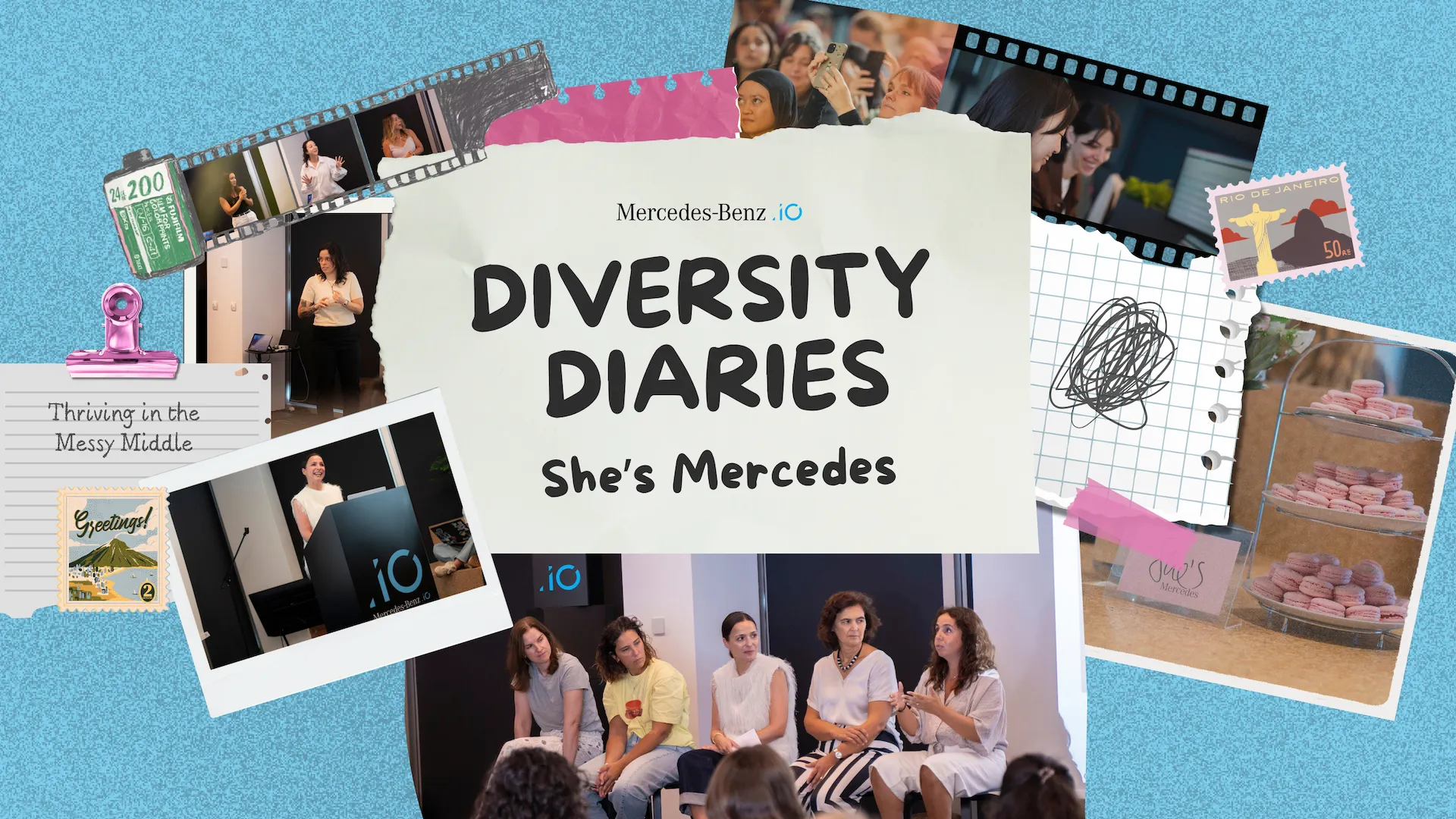
Diversity Diaries: Why Spaces Like She's Mercedes Still Matter
Do we still need initiatives like She's Mercedes?
Oct 6, 2026