Behind the Engine: How the Mercedes Virtual Assistant Is Transforming Online Vehicle Shopping
Welcome to the third edition of our Behind the Engine series, where we take a closer look at the digital products powering the Mercedes‑Benz experience. This time, we’re stepping into the world of conversational commerce to explore a product that’s changing how customers search for and discover vehicles online: the Mercedes Virtual Assistant (MVA).
Launched in Austria for stock vehicles, the MVA brings a new level of simplicity and personalisation to the online store, allowing customers to find their ideal vehicle by simply describing what they’re looking for, just like they would in a conversation with an expert.
Contents
The Mercedes Virtual Assistant at a Glance
The Mercedes Virtual Assistant (MVA) is an AI‑powered assistant integrated directly into the Mercedes‑Benz online store. It enables customers to search for vehicles using natural language, simply by describing their needs, preferences, and expectations in their own words.
Customers can use the MVA like speaking to a sales expert, getting real-time personalised information and vehicle suggestions without dealing with complicated filters or specifications.
From Browsing to Buying: Where the MVA Comes In
The MVA currently sits within the online shopping journey for stock vehicles in Austria, where it is available directly on the Mercedes‑Benz online store.
At this stage of the journey, the assistant introduces conversational commerce to vehicle discovery. Customers can explain what they are looking for – whether it’s comfort, performance, space, or specific use cases – and receive tailored recommendations based on available stock. The experience is designed to feel intuitive and supportive, helping customers move from exploration to informed decision‑making without friction.
From Idea to Launch: Building a New Kind of Digital Assistant
Although the Mercedes Virtual Assistant launched in September 2025, the work behind it started months earlier.
The initiative began with a clear challenge from management: how can Mercedes‑Benz keep pace with emerging technologies and evolving customer expectations? From there, a dedicated team began exploring what an AI‑powered assistant could realistically and responsibly offer customers.
This early phase included discovery work with multiple teams, desk research, benchmark studies, user testing, and the definition of a clear AI (Artificial Intelligence) vision. At the same time, backend and frontend teams worked closely together to ensure the assistant could be seamlessly integrated into the existing online store. Only after this groundwork was completed did the assistant go live.
Built by Collaboration, Shaped by Design
Developing the MVA required close collaboration across disciplines. Designers, user researchers, frontend and backend developers, and quality assurance specialists all contributed to shaping the product.
Design played a particularly central role throughout the process. From the very beginning, design, product, and development worked hand in hand, refining the experience iteratively and learning from each step. Rather than delivering a fixed solution, the team evolved the assistant continuously, adapting it as insights emerged and real use cases became clearer.
Why the Mercedes Virtual Assistant Exists
Online vehicle shopping can quickly become overwhelming. Customers are often faced with countless filters, detailed specifications, and the challenge of translating real‑life needs into technical search criteria.
The Mercedes Virtual Assistant exists to bridge the gap between online convenience and personalised service. It allows customers to express what they are looking for naturally, just as they would in a conversation with a sales expert, while maintaining the speed and flexibility of a digital experience.
Its core purpose is to make vehicle discovery simple and intuitive, removing unnecessary complexity and helping customers feel confident in their choices without feeling overloaded.
Turning Conversation into Vehicle Recommendations
Fundamentally, the MVA uses AI to understand what customers are asking for in their own words and match those requests with real‑time vehicle inventory.
What truly makes the assistant stand out is its ability to turn everyday conversations into personalized recommendations. This way, customers don’t need to know technical terms or figure out how to phrase their questions – just speaking naturally is enough, as the assistant picks up on context, handles follow-up questions with ease, and adapts its responses as the conversation unfolds.
It can also explain vehicle features, such as engine specifications, safety features, or equipment packages, in a clear and accessible way, avoiding unnecessary jargon. Since it is fully integrated into the online store, customers can move smoothly from conversation to concrete vehicle options.
What’s Next for the Mercedes Virtual Assistant
Today, the Mercedes Virtual Assistant focuses on stock vehicles in Austria, but this is only the beginning.
The team is continuously learning from real customer interactions and using those insights to improve the experience. As AI technologies evolve, so will the MVA. With the aim of becoming an increasingly helpful, natural, and valuable companion throughout the digital vehicle shopping journey.
Related articles
Karla Silva
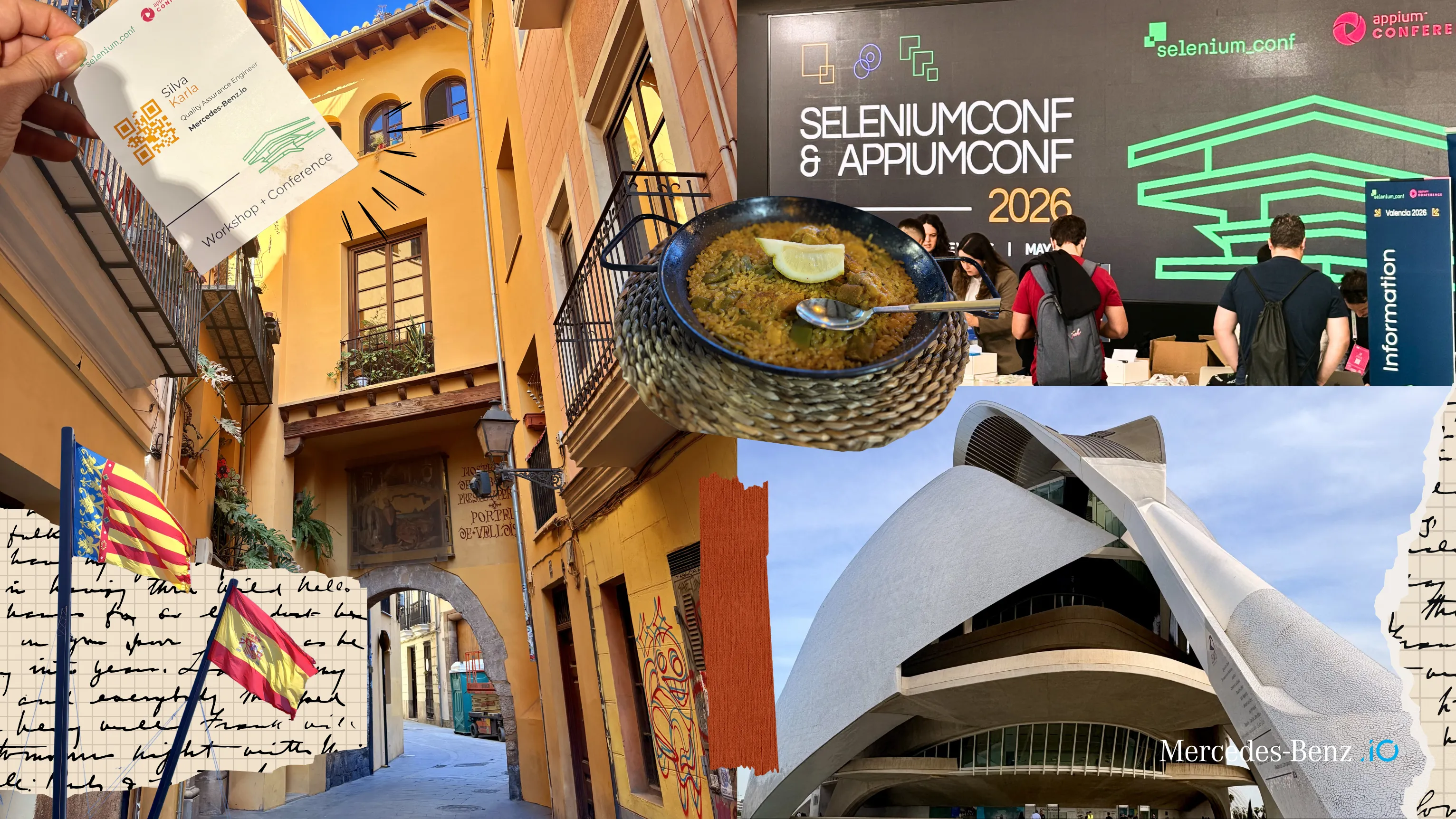
Selenium Conference 2026: AI, BiDi, and the Future of Test Automation
From May 6 to 8, the Selenium and Appium Conference took place in Valencia, bringing together the global automation community for three days of technical discussions and knowledge sharing. Built by the community and for
Jun 12, 2026

Alexandra Teixeira
The Art of the Juggle: Balancing Business, Team and Ownership as a Product Owner
Being a Product Owner (PO) often feels like standing at the centre of multiple worlds at once. There's the business, moving fast and reacting to market pressure; and also, the team, deeply invested in the product, armed
Jun 9, 2026
Cassia Tofano, Rita Saraiva
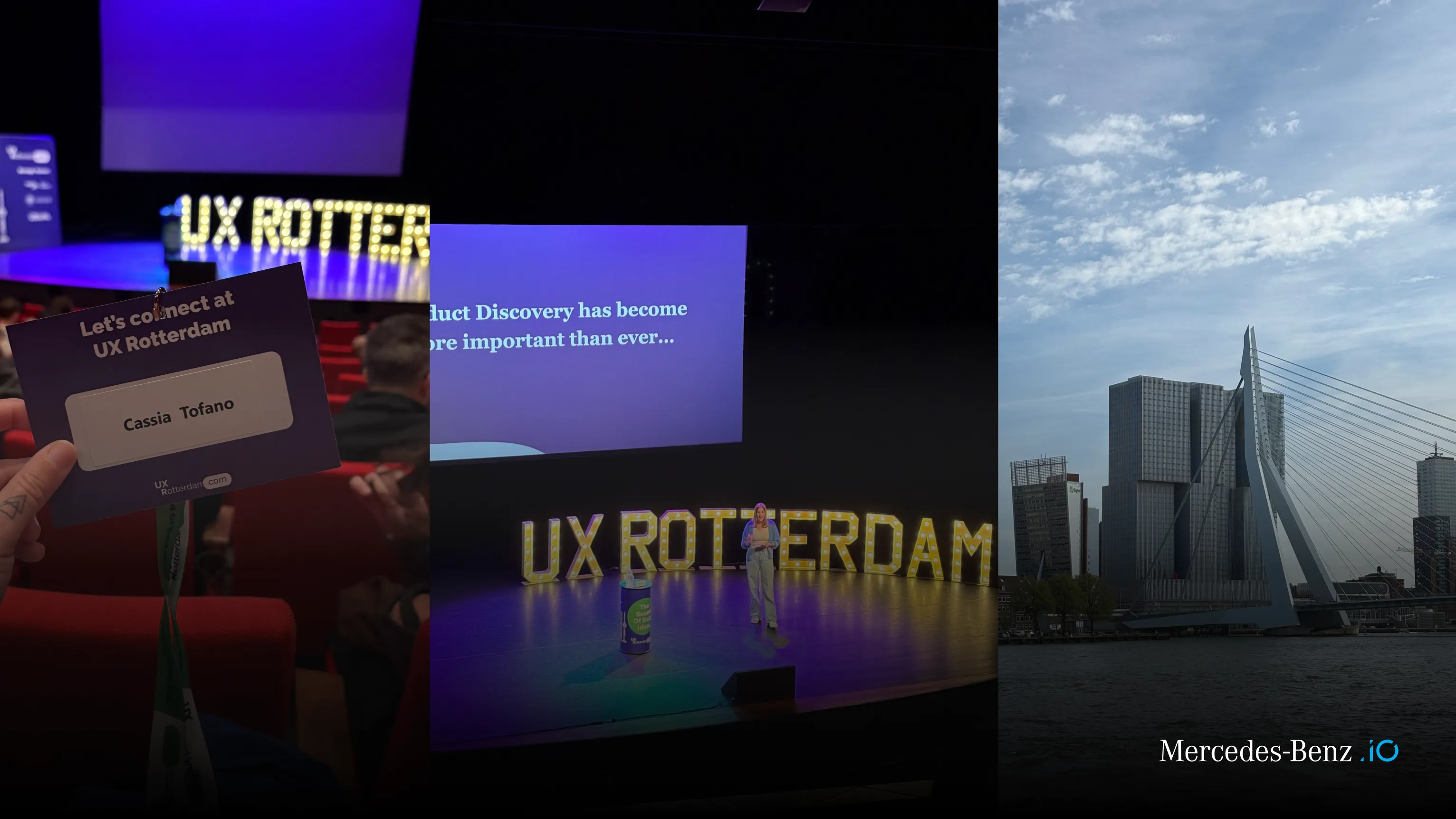
From UX Rotterdam 2026 to Mercedes-Benz.io: Reflections on AI, Strategy and the Future of User Experience
At UX Rotterdam 2026, Cassia Tofano and Rita Saraiva immersed themselves in a program rich with forward-thinking perspectives on the future of user experience. Their key takeaway: as artificial intelligence transforms de
Jun 5, 2026