The Art of the Juggle: Balancing Business, Team and Ownership as a Product Owner
Being a Product Owner (PO) often feels like standing at the centre of multiple worlds at once. There’s the business, moving fast and reacting to market pressure; and also, the team, deeply invested in the product, armed with data, research and strong ideas. Then, there’s the constant responsibility of making sure everyone feels heard, aligned and motivated. For Alexandra Teixeira, this “juggle” is one of the most defining aspects of being a Product Owner.
Contents
Balancing business needs and team needs
Balancing what the business needs with what the team needs is often more complex than it appears from the outside. Working closely with the team every day means seeing just how invested everyone is in the product — working on ideas grounded in data, user research and a genuine desire to improve the experience.
On the business side, however, reality can look different. Sometimes, decisions need to be made quickly in response to market changes, and in those moments the user perspective may not be fully prioritised.
Navigating these two realities means acting as a bridge. As a Product Owner, Alexandra sees the role as helping the business truly see the user, while also helping the team understand the business context.
What works best is bringing both sides into the same space. When business stakeholders and the team explain their perspectives directly to each other, it becomes easier to find solutions that everyone can accept. These conversations bring transparency, shared ownership and a sense of agreement on next steps — something that’s hard to achieve when discussions happen in isolation.
When shared ownership really mattered
One of the clearest moments of shared ownership came during the work on the MB.Charge feature.
Alexandra’s team manages Digital Extras on the Mercedes-Benz website — additional software-based features for vehicles. MB.Charge is one of those extras, allowing company administrators to create charging contracts and connect their fleet to them. For drivers, this means charging a vehicle anywhere and having the cost automatically billed to the company, making the entire charging process seamless.
However, behind the scenes it turned out to be a complex feature with extensive business rules and dependencies. What could easily have turned into a challenging and fragmented delivery instead became a strong example of collaboration.
Through workshops, shared flow definitions and regular alignment, the teams turned a complex vision into reality. It was not always easy, but without that collaboration, the feature might never have moved beyond the idea stage.
Making people feel heard and aligned
Ensuring that stakeholders and the team feel heard starts with listening — truly listening. Alexandra describes the role as being “the shrink in service of the ART,” always paying attention to concerns, motivations and friction points.
When conflicts arise, retrospectives become a powerful tool, helping to uncover root causes and create a safe space for honest discussion. If the team starts to feel a loss of ownership, bringing the business closer into the conversation helps both sides reconnect with each other’s realities.
A consistently positive mindset also plays a role: energy is contagious, and staying constructive has a noticeable impact on how others show up and collaborate. And when it comes to motivation, sometimes the answer is simple: strong team bonds.
Why the balancing act is still worth it
The balancing act definitely comes with its fair share of “white hairs” — perhaps enough to justify invoicing hairdresser costs now and then — but it’s also one of the most rewarding parts of the role.
Being a Product Owner often feels like being a magician, trying to be everywhere at once. For Alexandra, this aspect of the role is especially meaningful. Without relying solely on deep technical expertise, supporting the team through communication, problem-solving and people management becomes the strongest way to add value.
Combining problem-solving with people leadership creates a balance between two worlds — not always perfect, but often close enough.
One insight for other Product Owners
If there’s one insight to share with other Product Owners facing similar pressures, it’s this: listen first. Don’t rush to fix everything immediately. Take time to listen to the team, stakeholders and peers. Together, identify the real issues and work collaboratively towards solutions.
There’s nothing more powerful — or more motivating — than feeling heard and genuinely considered in decision-making. When people feel that way, commitment and trust naturally follow. And if all else fails, a good carrot cake doesn’t hurt either.
Related articles
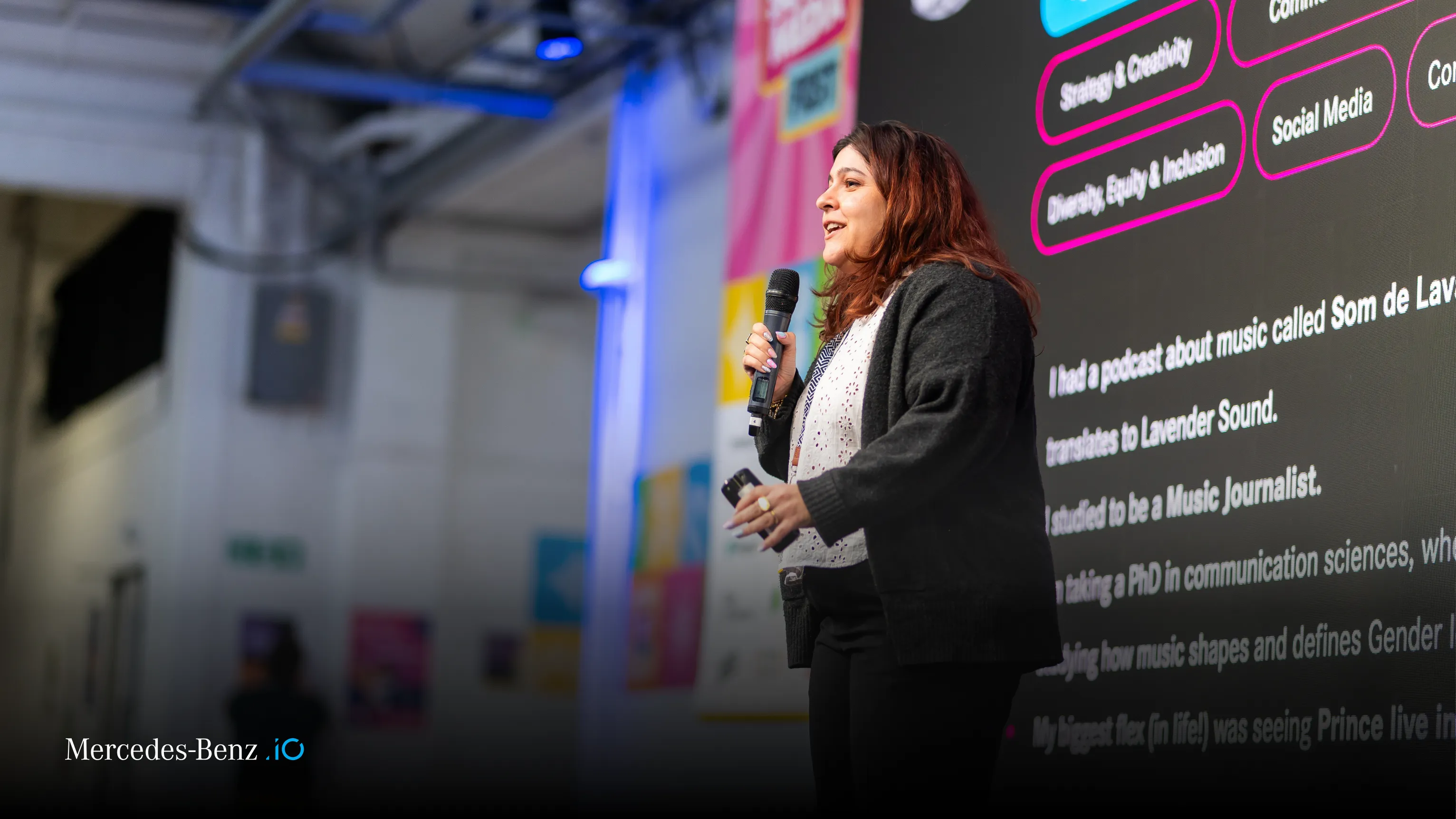
Patricia Fernandes
Beyond Posting: Advocacy in Tech Starts Before Content
As a Social Media Specialist at Mercedes-Benz.io, Patricia Fernandes has spent years working at the intersection of technology, storytelling and employee advocacy. Through that work, she has observed a recurring pattern:
Jul 24, 2026
Daniel Tarita da Silva, Rafael Esteves Pereira
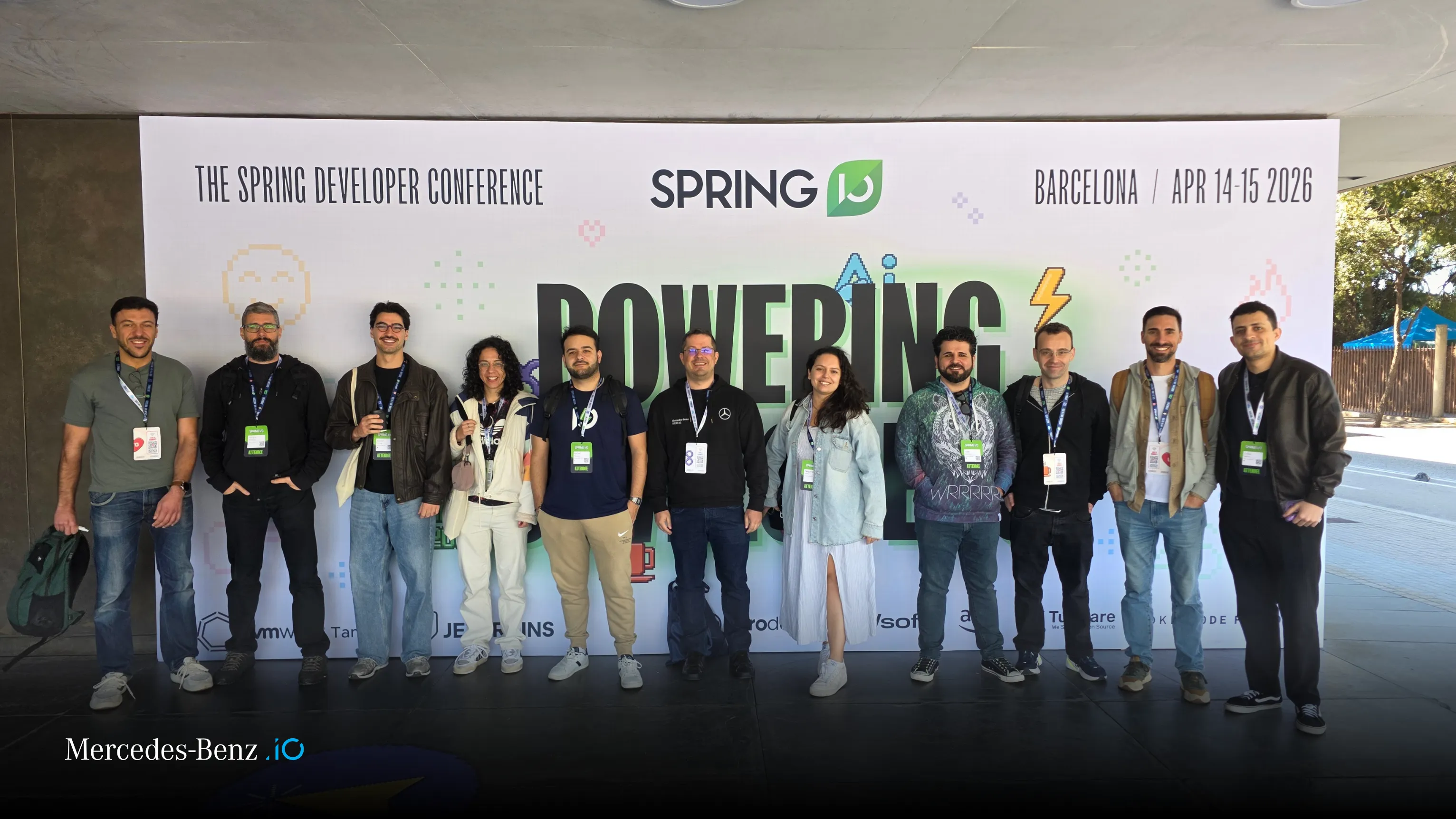
Spring I/O 2026: When Modern Backend Development Becomes Less About the Framework and More About the Thinking
For years, backend conferences were often defined by frameworks, architectures and technical innovation. Which pattern should we adopt? Which technology should we invest in next? Which capability will change how we build
Jul 17, 2026
Timur Irgac
Enabling Teams: When Bottom-Up Beats Top-Down
Analyse the options. Build the plan. Communicate the decision. But for Timur, Release Train Engineer at Mercedes-Benz.io, one of the most valuable lessons in organisational change came from doing the opposite.
Jul 14, 2026