
LDX3 London 2026: Leading in a World where AI Changes Everything. But does it?
There is a version of the AI conversation that has become impossible to avoid: adoption rates, productivity gains, new tools every week, and the question quietly sitting beneath it all: are we keeping up?
At LDX3 London, the conversations felt different. Rather than focusing on the technology itself, many speakers explored what AI is revealing about how organisations work, how leadership scales, and what remains essential even as tools continue to evolve. Across engineering, design and leadership tracks, one message surfaced repeatedly: the challenge is no longer simply building faster. It’s deciding better.

Daniela Santos
Spends most of her time talking about AI, but still says “Thank you” to the GenAI platforms. We never know…
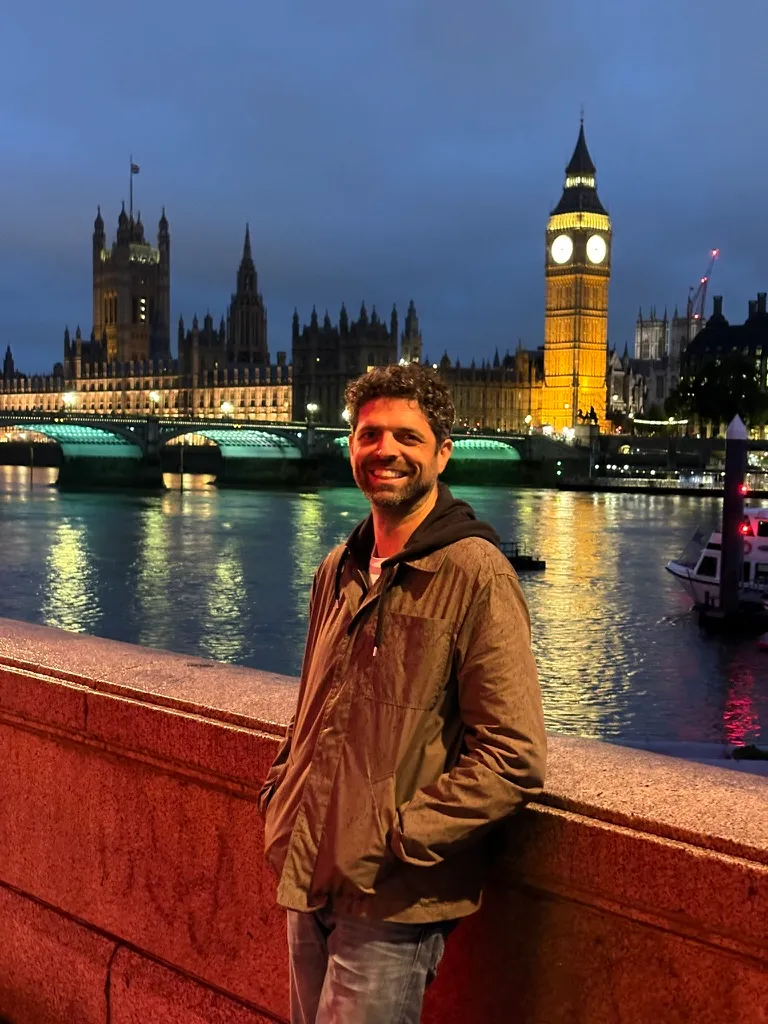
Duarte Segurado
Before he became a Scrum Master, he was a Scrum Half when playing rugby years before. It seems like Scrum has been my calling all along!

Hugo Melim
He is a big fan of sports, frequently playing for Mercedes-Benz.io, and he has recently started practicing Muay Thai.

Tiago Machado
He is cursed with an absurdly good sense of smell. According to him, he can smell lunchtime ahead of everyone else!
Contents
When building becomes easier, deciding becomes harder
One of the strongest themes throughout the conference was that AI is fundamentally changing the economics of software development. If building features becomes dramatically cheaper, the bottleneck shifts elsewhere.
For Duarte Segurado, that was one of the most significant takeaways from the event.
This reframes leadership from optimising delivery speed to maximising impact through prioritisation, validation and iteration. The question becomes: how do we ensure we’re solving the right problems, fast enough, in a non-deterministic environment?
The same idea appeared in different forms throughout the conference. Increased productivity doesn’t automatically translate into better outcomes, particularly when organisations remain focused on output instead of impact.
Tiago Machado connected this challenge to another theme that resonated strongly with him: anticipation.
The biggest lesson was that leadership at scale is often an exercise in anticipation rather than optimisation. I found myself thinking about how we can recognise early signals and prepare for them before they become difficult to address.
Taken together, both perspectives point towards a similar conclusion. As execution becomes increasingly automated, leadership creates value less through delivery itself and more through judgement, prioritisation and the ability to recognise what’s coming next.
Designing environments where good decisions happen
If the first challenge is deciding what matters, the second is creating organisations capable of acting on those decisions effectively.
Several sessions challenged traditional ideas around scalability, control and quality. Rather than adding more approval layers, the speakers consistently advocated for creating systems that help people make better decisions independently.
For Hugo Melim, one principle stood out:
The best leadership doesn’t gatekeep; it architects the environment so more people can move fast and still get it right. In an AI-enabled world, that means clear guardrails, shared context, strong feedback loops and enough trust for teams to act without waiting for permission.
The concept of guardrails over gates surfaced repeatedly. Better defaults, stronger feedback loops, clear practices and shared context create organisations that scale without increasing complexity.
Interestingly, this connected directly back to Tiago’s reflections on platform thinking and organisational feedback. The teams that adapt most successfully aren’t necessarily the fastest. They’re the ones that identify signals early, learn continuously and invest in the conditions that enable better decisions before problems become urgent.
As organisations navigate AI adoption, this may become even more important. Technology alone is rarely the differentiator. The environment around it often is.
The tools are becoming universal. Judgment is not.
Perhaps the most reassuring message from LDX3 was that, despite the pace of technological change, the most valuable leadership qualities remain remarkably human.
Daniela Santos reflected on sessions exploring AI-native hiring and developer experience, particularly a case study from Meta. The expectation was that AI would fundamentally change what organisations look for in people. Instead, the opposite seemed true.
The criteria didn’t really change. What someone explores, the quality of what they produce, whether they question the AI’s output instead of trusting it blindly, how clearly they communicate… Only the way you observe those things changed.
As AI tools become increasingly available, technical access becomes less of a differentiator. The organisations that stand out are those that combine technology with critical thinking, communication and good judgement.
That observation also reinforces Duarte’s point about leadership evolving from technical authority towards context-setting and decision-making. When everyone has access to similar tools, competitive advantage comes from how organisations frame problems, align people and translate technology into meaningful outcomes.
The future may be increasingly AI-enabled, but it remains deeply human.
After LDX3 London…
Although they attended different sessions and approached the conference from different perspectives, Tiago, Duarte, Hugo and Daniela returned with conclusions that reinforce one another.
For Tiago, leadership means “anticipating tomorrow’s challenges and creating the conditions to solve them before they exist.”
For Duarte, it is about “shifting from building more to building what matters, guiding teams through constant change, and optimising for system-level impact.”
For Hugo, it requires “designing the system around teams, not just delivering individual solutions. Creating guardrails instead of gates and optimising for outcomes rather than output.”
And for Daniela, it means “holding firm on the things that don’t change (judgment, craft and care) while staying genuinely open to the things that do.”
Different perspectives, but one shared direction. The organisations that navigate this moment successfully will not necessarily be the ones that adopt every new tool first. They will be the ones that decide intentionally, build environments where people can succeed, and preserve the human qualities that technology cannot replace.
That is what they brought back from London.
Related articles

Mile Grncarov
After the Hype: What Building an AI-Powered Customer Experience Taught Us
Most customers don't begin a vehicle configuration journey with a list of technical specifications.
Jul 31, 2026
Ayoub El-Moussaoui
Reliability Starts Before Production: A Site Reliability Engineer's Perspective on Building Resilient Systems
When systems fail, it is easy to focus on what happens next. How quickly can the issue be found? How fast can services be restored? How quickly can teams get everything back to normal?
Jul 28, 2026
Patricia Fernandes
Beyond Posting: Advocacy in Tech Starts Before Content
As a Social Media Specialist at Mercedes-Benz.io, Patricia Fernandes has spent years working at the intersection of technology, storytelling and employee advocacy. Through that work, she has observed a recurring pattern:
Jul 24, 2026